
Hail damage that goes unseen can be the most devastating
How informed design and testing help protect buildings from hidden damage and future failure
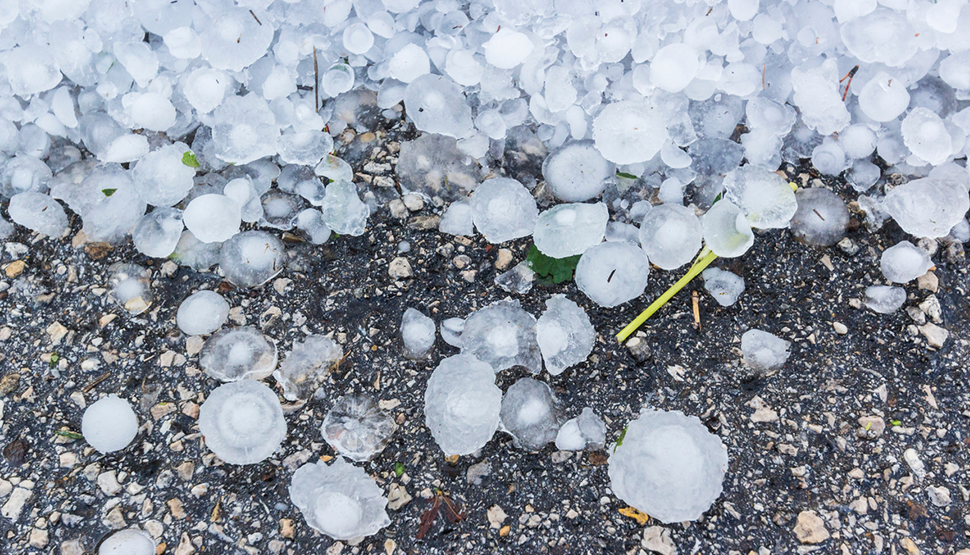
Hail accounts for as much as 50-80% of losses from severe convective storms, one of the fastest-growing sources of property damage worldwide.1 Yet, for years, the roofing industry has largely treated hail as a surface damage problem.
If the roof membrane or rooftop glazing survives the initial hail impact, an assembly was considered to have performed adequately. A primary reason behind this common consideration is that building codes are largely intended to protect life safety, with only limited attention given to continued structural or functional performance. Historically, hail has primarily caused surface impact damage and has rarely threatened a building's structural integrity or the safety of its occupants. As a result, building codes generally do not establish performance thresholds for how a roofing assembly should function following a hail event.
As hail events have become more severe, a new pattern has emerged. Larger hailstones are not only damaging roof coverings, but they are also cracking or crushing the insulation (such as cover boards) and components beneath them. While that damage may not be immediately visible, it can weaken the roofing assembly’s ability to resist future wind loads, increasing the risk of roof failure and water intrusion.
To address this evolving risk, FM Approvals expanded its hail performance ratings beyond Moderate Hail (MH) and Severe Hail (SH) by introducing the Very Severe Hail (VSH) rating, giving engineers a more accurate way to match roofing performance to the expected hazard. FM Approvals’ significant work in this area was recently recognized by ASTM International when Daniel Boardman (FM Approvals, Vice President, Manager, Building Materials) was awarded the prestigious Carl G. Cash award in June 2026 – an honor recognizing outstanding, research-driven contributions to building envelope technology and waterproofing. This initiative, along with many related research efforts and advancements led by Daniel and carried forward by FM Approvals engineers worldwide, began in 2015 and directly contributed to the development of the VSH rating for low-slope roofing.
FM's hail hazard maps classify locations as either MH, SH or VSH based on the size of hail expected in that region. FM Approved roofing assemblies designed for that level of exposure can then be specified in locations within the region. Rather than relying on a one-size-fits-all benchmark, the rating system supports the development of more resilient building systems and enables structural designs aligned with the climate hazards a facility is expected to face.
Start with the hazard, not the roof
Every roof does not have to be built to the highest possible hail rating. A manufacturing facility in central Texas may experience significantly different hail exposure than a warehouse in northern Europe or a distribution center in Australia. The goal is to have the right roofing assembly for the conditions the building is expected to experience over its lifetime.
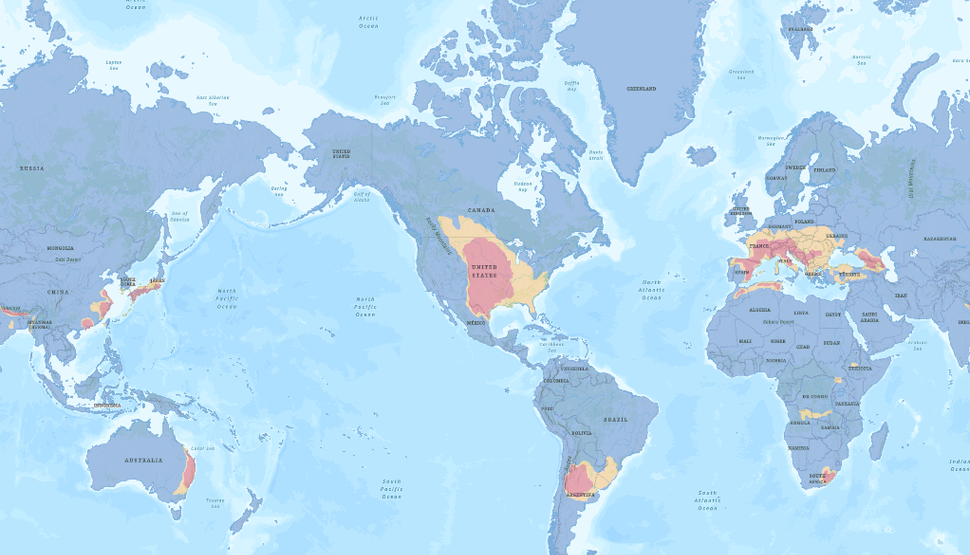
Figure 1. FM’s hail hazard maps provide a practical way to match roofing performance requirements to the actual hazard risk of a facility’s location. Updated in 2026 to include worldwide maps, these resources draw on decades of observed hail data, severe convective storm records, and machine learning.
FM’s engineering guidance begins with the facility’s location. After determining whether a site falls within a MH, SH or VSH region, stakeholders can access RoofNav to identify FM Approved roofing assemblies and products that are appropriate for that hazard level. The recommendations do not stop at the roof membrane. They also address skylights, exterior wall systems, and other exposed components that can become sources of water intrusion or operational disruption during a hail event.
The guidance also recognizes that not every facility has the same tolerance for damage. While SH-rated assemblies may be appropriate for many buildings in Severe Hail regions, facilities housing critical operations, sensitive manufacturing equipment or high-value inventory may benefit from specifying VSH-rated assemblies to provide additional protection.
Design the roofing system as a complete assembly
While the roof membrane is often the most visible component after a storm, the building's ability to continue protecting property depends on how the entire assembly performs under impact. Cover boards, insulation, fasteners, roof decks and attachment methods all influence whether a roofing system continues resisting water intrusion after hail damages the surface.
Rather than only approving individual roofing products, FM Approvals uniquely evaluates complete roofing assemblies to verify that all components continue performing together after hail impact. The performance of roofing assemblies is evaluated using FM 4470 (Roofing Assemblies for Class 1 and Noncombustible Roof Deck Construction), FM 4471 (Class 1 Panel Roofs). and FM 4475 (Class 1 Steep Slope Roof Covers). For building owners or developers, specifying an assembly that has been tested and certified to FM Approvals Standards confirms that it has been evaluated as a system rather than relying in individual components that are pieced together without truly testing how they perform together in the face of climate-related hazards and other threats.
The same systems approach extends beyond the roof itself. Skylights, heat and smoke vents, roof-mounted equipment, and other exposed building components can each become a point of failure during a hail event. Skylights can fracture and allow significant interior water damage. Condenser coils on rooftop HVAC equipment are highly susceptible to hail and often require hail guards in both Severe and Very Severe Hail regions.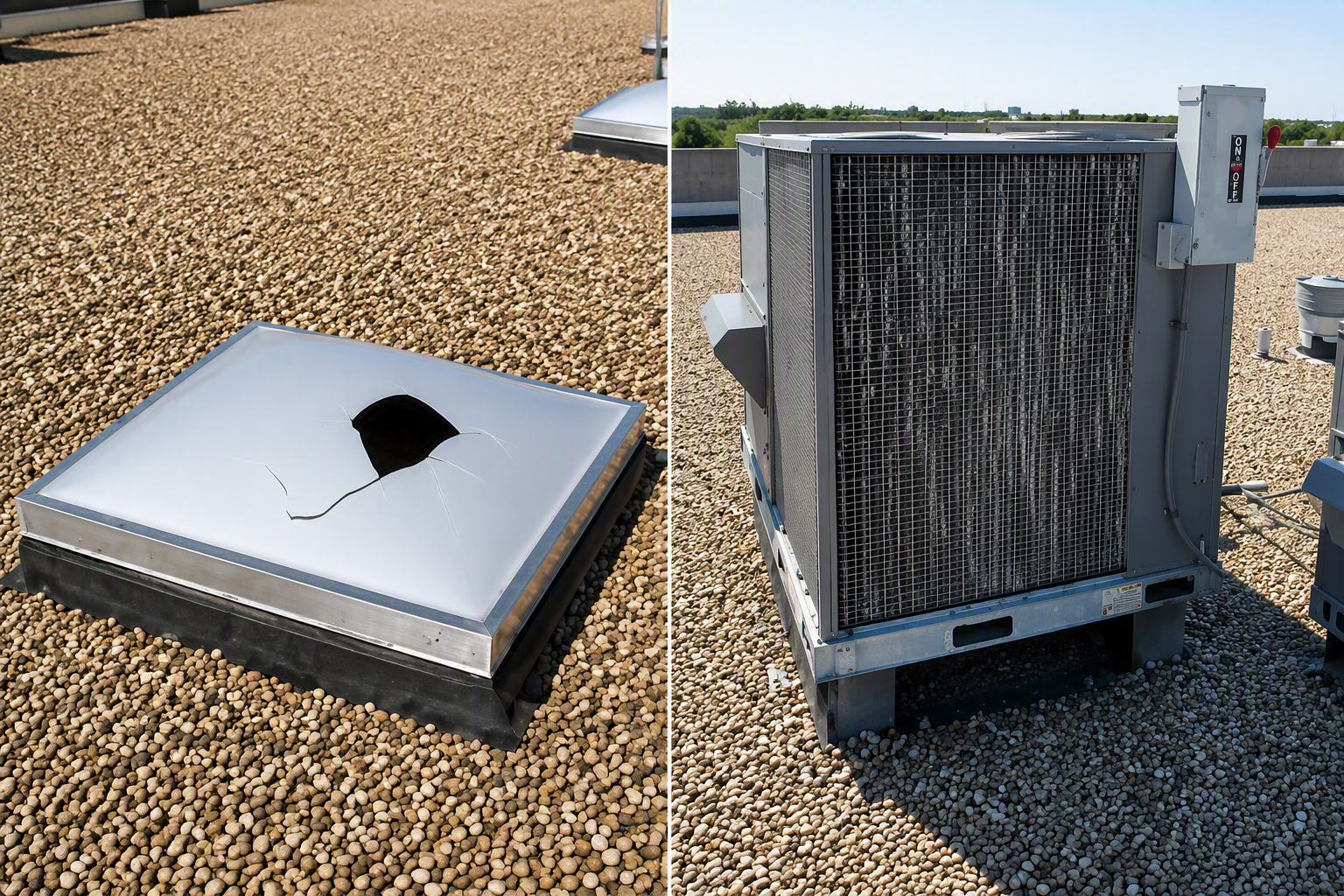
Figure 2. Hail damage extends beyond the roof surface. Skylights and rooftop HVAC equipment are common points of failure that can allow water intrusion or disrupt building operations following a severe hail event.
Roof-mounted and building-integrated photovoltaic systems should likewise be selected and protected based on the site's expected hazard level, so the building envelope performs as an integrated system rather than a collection of individual products. These components are evaluated using FM 4478 (Roof-Mounted Rigid Photovoltaic Module Systems) and FM 4483 (Building-Integrated Photovoltaic Wall Mounted Systems).
Higher standards drive reliable products
The introduction of the Very Severe Hail rating established a substantially higher benchmark for roofing performance in regions exposed to the largest hail events. When the rating was introduced, many assemblies that met the existing Severe Hail requirements no longer qualified. Rather than lowering the benchmark, FM Approvals maintained the higher performance criteria, influencing manufacturers to design roofing systems with stronger cover boards, reinforced components, and improved fastening systems.
This evolution reflects FM Approvals’ research-backed approach to supporting the advancement of climate-resilient building systems.
As analysis of real-world property losses and hazard-based research improves the understanding of hail risk, FM Approvals’ standards will continue to be refined to better reflect how building systems perform under actual conditions. Those higher standards, in turn, encourage manufacturers to develop more resilient building systems.
For more information on hail resilient roofing design, download FM Property Loss Prevention Data Sheet 1-34 (Hail Damage). Follow FM Approvals on LinkedIn to learn more about our Examination Standards. Access the Approval Guide and RoofNav to browse all FM Approved products.1 Allianz “Severe convective storms: Trends, impacts, and pathways to resilience,” March 2026.