
Resilient building envelope design and loss prevention tactics can result in 4X fewer wind losses
How FM Approved systems and materials help combat property losses resulting from wind events
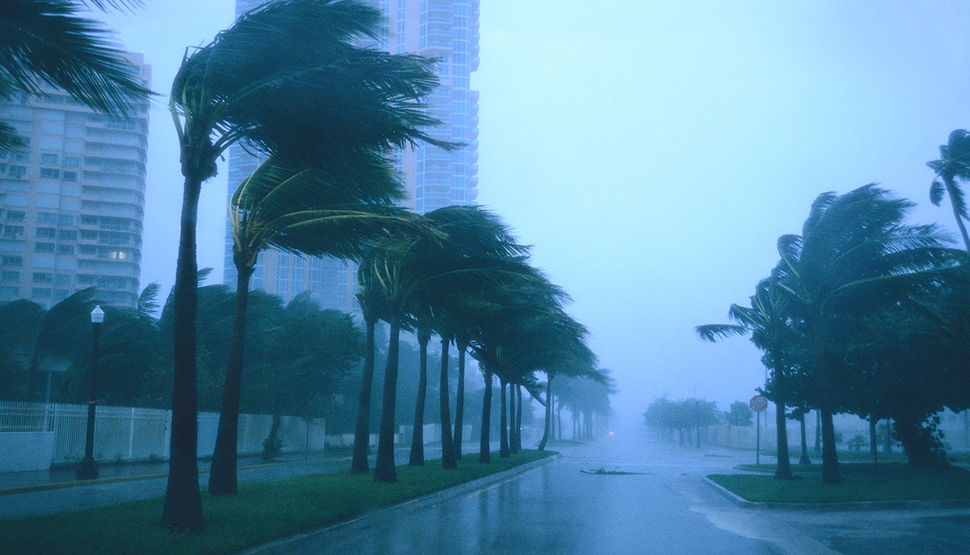
Tornadoes, hail, straight-line winds and severe thunderstorms in the United States generated US$51 billion in insured losses in 2025.1 The duration, location, and intensity of these types of storms can be difficult to predict and highlight the need to be prepared with proper design of building envelope components and roof mounted and outdoor equipment.
In addition, globally, tropical cyclones (massive rotating storm systems) are among the most destructive natural hazards, exposing facilities to extreme winds, heavy rainfall, storm surge, and wind-driven debris. While referred to by different regional names around the world (hurricanes, typhoons, cyclones), tropical cyclones can cause extensive property damage and business interruption, with recent events highlighting the increasing potential for rapidly intensifying storms and severe rainfall.
Since these events are often accompanied by heavy rain, damage rarely ends with the initial wind event. As wind damages a roof, exterior walls, rooftop equipment, or other elements, water intrusion can quickly worsen the extent of the loss. Often, these wind events can escalate from a localized building failure to extensive equipment damage, spoiled inventory, and business interruption from forced downtime.
Understanding where buildings are most vulnerable to wind-driven damage is the foundation of effective loss prevention. Accurate hazard information enables engineers to know what conditions to design for. This positions building systems to be engineered to withstand expected loads.
FM’s regional wind and tornado resources, in conjunction with the wind hazard guidance in FM Property Loss Prevention Data Sheet 1-28, “Wind Design” (FMDS 1-28), help facility owners and engineers evaluate the wind conditions a site is likely to experience and design accordingly.
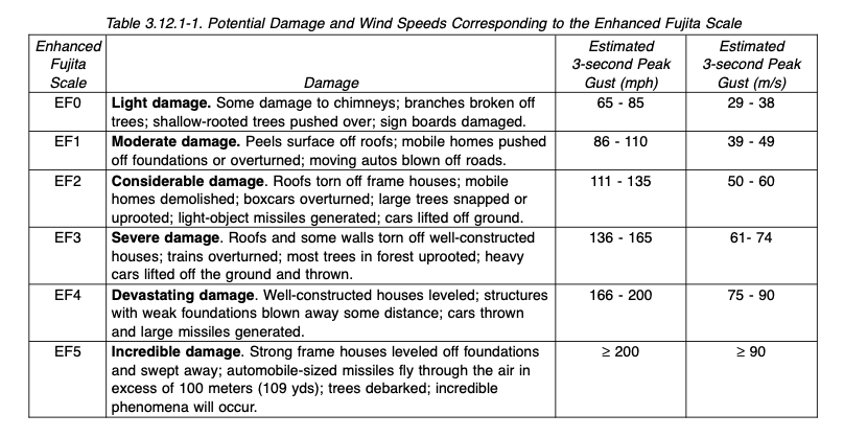
Figure 1. Table 3.12.1-1 from FM 1-28. Wind hazards vary by location and expected building performance changes as wind speeds increase. Together with the regional wind and tornado maps, this table can help facility owners and engineers evaluate site-specific hazards and select appropriate building design and FM Approved products.
Engineering the building envelope for wind resilience
Excessive wind does not only push the limits of individual building products, but rather the entire building envelope. A roof covering and wall panels may be rated for a certain wind pressure. However, if the fasteners fail, the insulation separates, the flashing peels away, or mounted equipment tears through the roof; then the standalone performance of the roof covering is compromised. The integrity of the building envelope depends on how these systems (and their connections) perform together when significant wind loads are present.
According to FM’s claims data, buildings constructed with FM Approved building products experience four times fewer wind losses.
A major contributor to favorable wind performance is the use of FM Approved building components with the proper wind rating. Where system-level performance is critical, roofing systems, exterior wall assemblies, photovoltaic installations, and other building systems are evaluated together. This ensures that key components and related equipment all perform under real-world conditions, maintaining overall system integrity.
Key building envelope wind design considerations include:
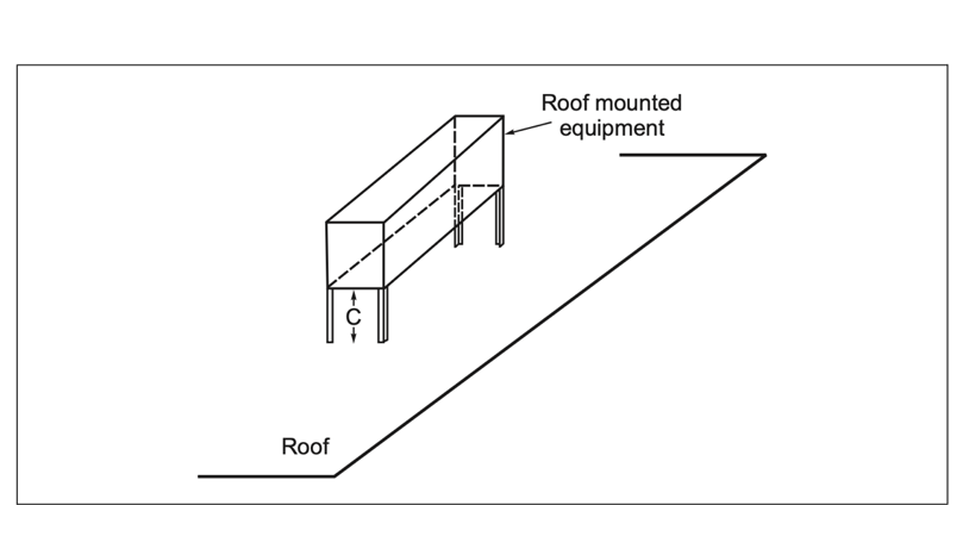
Roofing assemblies and roof-mounted equipment – Roof failures often become the biggest source of loss during wind events because they create a direct pathway for water intrusion. In major loss events, tens of thousands of square feet of uplifted roofing can expose two to three times that area to water damage inside the building. This exposes production equipment, inventory, and critical building systems to damaging conditions while disrupting operations. To help reduce this risk, the complete roof assembly, including the roof deck, insulation, fasteners, flashing, and roof covering, along with components such as skylights and roof-mounted equipment, can be designed in accordance with recommendations outlined in FM Property Loss Prevention Data Sheets.
Even when the roof remains intact, wind-driven debris or rooftop equipment that is not adequately anchored can tumble across the roof and create large openings that allow water into the building.
Relevant wind-related FM Approvals Examination Standards include:
- FM 4430 (Heat and Smoke Vents)
- FM 4431 (Skylights)
- FM 4435 (Edge Systems Used with Low Slope Roofing Systems)
- FM 4470 (Roofing Assemblies for use in Class 1 and Noncombustible Roof Deck Construction)
- FM 4471 (Class 1 Roof Panels)
- FM 4475 (Class 1 Steep Slope Roof Covers)
- FM 4480 (Anchors for Roof-Mounted Equipment)
Photovoltaic (PV) assemblies – Similar to other roof-mounted equipment, PV systems must remain securely attached during wind events to avoid costly property damage. Improperly secured mounting systems can tear away portions of the roof covering or roof substrate. Facilities that rely on PV for power generation may also experience significant business interruption while systems are repaired or replaced. Building-integrated photovoltaic (BIPV) systems introduce additional fire performance considerations because of their unique positioning in the building envelope.
Relevant PV-related FM Approvals Examination Standards include:
- FM 4476 (Flexible Photovoltaic Modules)
- FM 4478 (Roof-Mounted Rigid Photovoltaic Module Systems)
- FM 4479 (Steep Slope Building Integrated Photovoltaic Roof Covers)
- FM 4480 (Ground-Mounted or Elevated Photovoltaic Module Systems)
- FM 4481 (Anchors for Roof Mounted Equipment)
- FM 4483 (Building Integrated Photovoltaic Wall Mounted Systems)
Wall assemblies – Exterior walls are subjected to many of the same wind forces as roofs. Wall panels, insulated metal panel systems, and other wall assemblies can be evaluated to determine their resistance against wind pressures and ability to maintain attachment to the structure. If wall securement systems fail, large sections can detach, allowing wind-driven rain to enter the facility and damage exposed equipment, inventory and finished goods.
The relevant standards for wall assemblies are FM 4881 (Class 1 Exterior Wall Systems) and FM 4411 (Cavity Wall Systems).
Wind resilience starts with accurate hazard information
The engineering behind wind resilience does not end with building design. Every major wind event provides new insight into how buildings and building systems perform under real-world conditions. FM Engineering and Research uses those findings to refine regional wind maps, property loss prevention data sheets and FM Approvals’ examination standards, helping ensure engineering guidance and building systems evolve alongside the hazards they are designed to withstand. This continuous cycle of research, testing, and real-world performance evaluation is central to FM’s and FM Approvals’ approach to climate resilience and property loss prevention.
1 Insurance Information Institute “Triple-I: Severe Convective Storms Generate More Than $50B in Insured Losses for Third Consecutive Year,” April 14, 2026.