
Going beyond green for data centers
Balancing international sustainability standards with resilience
From 2024 to 2030, data center electricity consumption is projected to rise by around 15% per year, more than four times faster than the growth rate of total electricity consumption across all other sectors. Within data center environments, information technology (IT) equipment already accounts for roughly 60% of total energy use, and this steep trajectory reflects the inevitable convergence of digital transformation and energy-intensive workloads like AI, cloud and hyperscale computing. This level of growth could strain national grids, increase carbon missions, and undermine broader climate targets.
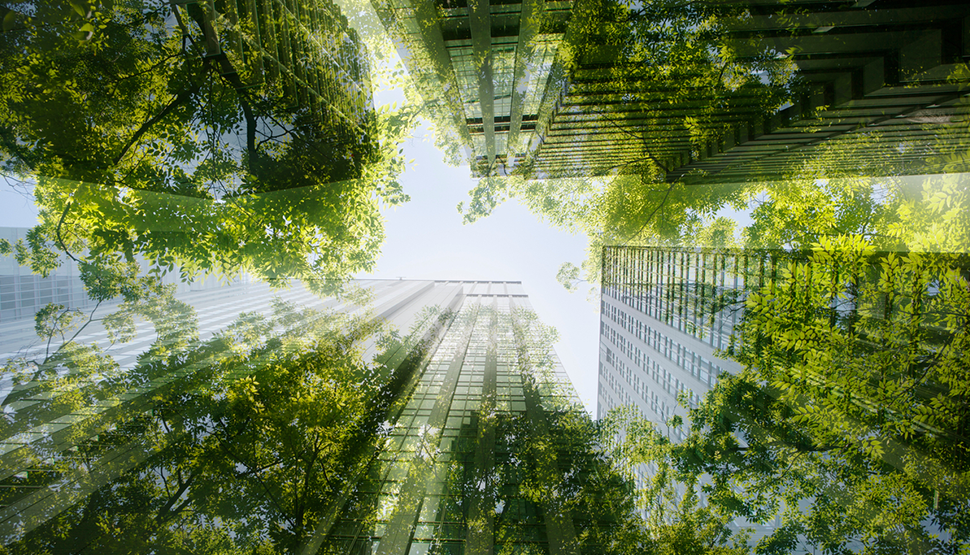
Regulators are now building on years of voluntary sustainability efforts with defined requirements for baseline efficiency or example, municipal ordinances — such as Frankfurt Germany’s façade-greening requirement, which mandates that at least half of building facades be covered with vegetation — are pushing data centers toward living walls as one instance of urban greening trends coming to fruition in Europe.
In Singapore, the government’s Green Data Centre Roadmap links new capacity allocations to strict efficiency targets (at least 300 MW in the near term), while the Green Mark for Data Centres certification scheme rewards renewable energy integration, advanced cooling methods and water efficiency. The new Singapore Standard on Energy Efficiency of Data Centre IT Equipment (SS 715:2025) will push IT equipment performance further, aiming for approximately 30% energy reductions by requiring servers and networking gear to operate safely in higher-temperature environments.
While these regulations define high-level directives, it is at the product level where the impact is most acutely felt by operators and manufacturers. Every requirement for greener facades, renewable energy and advanced cooling eventually translates into a decision about which products to trust based on their compatibility with the .requirements. For many insurers, especially those covering mission-critical facilities, the use of tested and certified systems or products can often be a condition of coverage.
The reason is simple: data center stakeholders need assurance that sustainable systems are not just efficient when it comes to energy usage but can also survive the potentially damaging impacts of real-world hazards. That assurance can be supported by loss prevention testing that measures performance under conditions commonly found with perils such as fire and natural hazards, including wind and hail. FM Approvals provides globally recognized certification that confirms whether loss prevention products deliver on both sustainability and loss prevention.
Three product categories are shaped by international sustainability regulations
Here are some of the key product categories shared by sustainability regulations and the associated FM Approvals examinations standards that ensure products meet the internationally mandated green goals, alongside other stated performance requirements, without compromising structural integrity or resilience to hazards.
- Photovoltaic (PV) systems for renewable integration: Singapore’s Green Mark certification makes solar power a core requirement for data centers seeking to cut grid dependence, and the same pressure is mounting globally. The European Union has raised its Renewable Energy Directive target to 42.5% by 2030, and under the Energy Performance of Buildings Directive, all new commercial buildings must incorporate roof-mounted PV by 2026. All PV systems (including roof-mounted, ground-mounted and building-integrated) must withstand fire exposure, wind uplift and hail if they are to deliver sustainable power without jeopardizing data center uptime. FM Approvals Examination Standard 4478: Roof-Mounted Rigid PV Module Systems, FM Approvals Examination Standard 4479: Steep Slope Building-Integrated PV Covers, and FM Approvals Examination Standard 4480: Ground-Mounted or Elevated PV Module Systems all validate the specific product type’s performance against natural hazards, giving operators confidence that renewable energy investments will strengthen resilience The performance of PV systems that successfully complete testing requirements to become FM Approved can be relied upon under the toughest conditions and minimize need to replace or repair complex equipment.
- Cooling technologies in high-efficiency environments: While more efficient solutions such as immersive liquid cooling and hybrid systems reduce dependence on energy-intensive air conditioning, they also introduce new infrastructure and potential fire safety considerations. FM Approvals Examination Standard 4924: Pipe and Duct Insulation and FM Approvals Examination Standard 4925: Fabric Ducts and Insulation Lined HVAC Ducts define the testing requirements that ensure cooling lines and ducts do not propagate fire, while FM 4990: Firestopping protects against fire and smoke spread through pipe penetrations. Together, these standards allow operators to deploy advanced cooling strategies without trading efficiency for resilience.
- Energy-efficient infrastructure: When servers and other networking equipment are required to operate at higher temperatures, the surrounding infrastructure can be strained. Complementary FM Approvals Examination Standards such as FM 6510: Condition Monitoring for Switchgear Equipment and FM 6540: Lithium-Ion Battery Off-Gas Detection help safeguard critical equipment by detecting overheating, insulation breakdowns or other early signs of battery failure before they escalate into significant events or thermal runaway which can result in extended downtime.
Certification that builds confidence in green data center design
As more sustainability efforts are mandated and defined by regulations, data centers environments must incorporate designs that are both compatible and resilient. From living facades to PV arrays, cooling systems to IT infrastructure, certification provides the assurance that products designed to mitigate loss will perform under fire, wind and other real-world hazards – all while abiding by local, regional, national, and international requirements. As a worldwide leader in international testing and certification, FM Approvals is equipped to help the manufacturers and users of these products navigate the complexities of the ever-evolving regulatory environment. For multinational operators, FM Approvals’ support can be especially critical as we understand the similarities and differences in all markets worldwide.
FM Approvals objectively tests property loss prevention products and services to the FM Approvals Examination Standards that we have developed and deployed. Moreover, we are accredited and recognized by global organizations, including;
Our testing and certification processes instill confidence in FM Approved products across markets, giving global data center stakeholders assurance that tested and certified loss prevention systems can help protect facilities from threatening hazards faced anywhere in the world.
To learn more about the products we certify and our Examination Standards, visit fmapprovals.com. To find all FM Approved products, visit the Approval Guide where product information, engineering data and technical information for more than 60,000 FM Approved products can be found. You can also find an FM Approvals office near you.