
The role of dissolved gas analysis in the condition monitoring of transformers
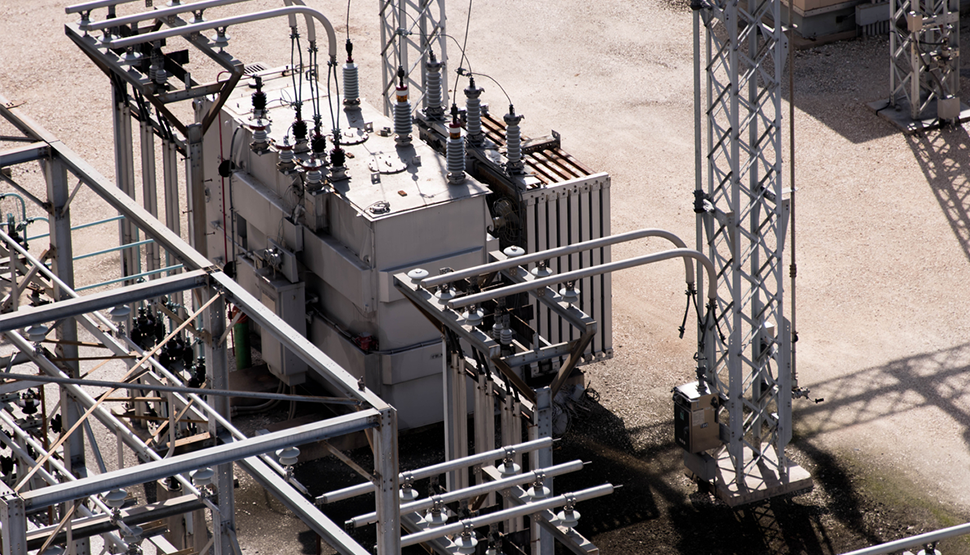
Imagine: It’s 2:15 p.m. on an unusually hot July afternoon when a utility operator notices a steady rise in dissolved hydrogen and acetylene levels inside a 25-year-old transformer. The unit appears to be operating normally, but the gas profile tells a different story.
Years ago, there was no early warning of transformer stress. Most utilities relied on annual manual oil sampling – a process that required technicians to travel to each unit, pull a liquid sample, and send it to a lab before waiting for results. The process offered only a few data points per year and required significant time and interpretation.
Dissolved gas analysis (DGA) has changed the game. In liquid-immersed transformers — whether using mineral oil, natural esters, synthetic esters or silicone oil — electrical and thermal stresses generate fault gases that dissolve into the insulating liquid. Monitoring those gases provides one of the earliest indications that something inside the transformer is beginning to degrade.
Today, continuous DGA monitoring systems can provide daily readings, giving operators the ability to distinguish normal load-driven variations from genuine signs of internal stress. These systems flag early indicators of fault in time and allow the operator to shift strategies and rebalance the load or dispatch a technician, if necessary.
FM Approvals Examination Standard 6520 for Dissolved Gas Analysis Monitoring Systems in Liquid-Immersed Transformers plays a critical role in this shift of DGA towards data-driven monitoring. The standard establishes how these systems should be tested, measured, and validated so that the insights that operators rely on are accurate and dependable throughout a transformer’s lifetime.
Fault conditions that produce diagnostic gases
Inside a liquid-immersed transformer, several types of electrical and thermal faults can develop, including:
- Arcing
- Overheating of oil or windings
- Thermal faults at different temperature levels
- Insulation or paper degradation
- Partial discharge
- Low-energy sparking
Each of these conditions produces characteristic dissolved gases. References such as IEC 60599: Mineral oil-filled electrical equipment in service – Guidance on the interpretation of dissolved and free gases analysis and CIGRE Technical Brochure 771: Advances in DGA Interpretation document how gas combinations, ratios and concentrations correlate with specific failure modes.
For example, CIGRE 771 provides reference concentration levels showing how dissolved gas values rise as conditions move from typical operation toward pre-failure.
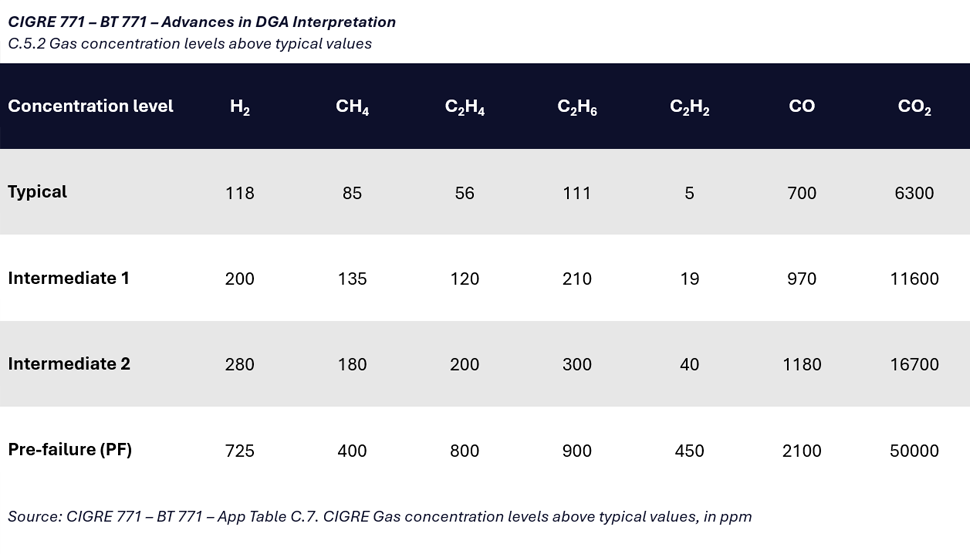
The early indicators of these faults can be even more subtle, and gas trends may shift with load, temperature, and environmental factors. DGA monitors must detect small changes in gas accurately, distinguish fault activity from operational variations, and be able to perform consistently across long service periods.
Therefore, the reliability of the monitoring system itself becomes just as important as the data it produces. FM 6520 does not interpret gas data but provides critical assurance that the monitoring system is designed to provide correct, reliable data.
Five questions FM 6520 helps answer about a DGA monitoring system
When a utility or industrial operator installs a continuous DGA monitoring system, the real challenge isn’t understanding how the device works — it’s knowing whether the information it provides can be trusted. After all, early gas changes can be subtle, and a single reading can influence major operational decisions.
FM Approvals Examination Standard 6520 focuses on answering a core set of questions about the system’s performance that reflect the practical concerns operators have when relying on these systems to guide real-time maintenance decisions, including:
- Can the system detect the right gases?
Transformers produce specific dissolved gases when faults begin to develop, such as hydrogen, acetylene, ethylene, and methane. FM 6520 confirms that a monitoring system can identify these gases and pick up meaningful changes that could indicate arcing, overheating, insulation breakdown, or other early-stage issues. - Can the system report gas levels accurately across the fault-relevant ranges?
FM 6520 evaluates whether a monitor can indicate the gas concentration ranges tied to developing faults, as outlined by references such as IEC 60599 and CIGRE 771. These ranges reflect decades of field data, including thresholds for transformers at different ages and conditions. - Do the monitor’s readings reflect what’s actually happening inside the transformer?
During testing, FM Approvals captures a reading from the monitor and simultaneously takes an oil sample for laboratory analysis. This comparison confirms whether the monitor’s output matches real dissolved gas levels inside the transformer. - Will the system hold up when the weather and operating conditions change?
Transformers typically operate outdoors, where temperature and environmental conditions can shift dramatically. FM 6520 evaluates whether a monitoring system can withstand the same stresses as the equipment it monitors without compromising data quality. - Can the system produce stable, trustworthy data day after day, not just during initial testing?
Transformers may run for decades, and continuous monitoring supplements the once-a-year oil sampling many operators relied on in the past. FM 6520 looks at long-term stability, whether the system can deliver consistent, dependable readings over time.
Strengthening confidence through verified performance
The evolution from annual oil sampling to continuous dissolved gas analysis represents a major advance in transformer diagnostics. But as monitoring becomes more frequent and more integral to maintenance, the performance of the monitoring system itself becomes a critical part of a facility’s risk management strategy.
FM Approvals Examination Standard 6520 provides a structured, transparent framework for evaluating these systems. By examining gas detection accuracy, measurement reliability, environmental resilience, and long-term stability, the standard helps establish a baseline of confidence for both manufacturers and users. It ensures that continuous monitoring systems are assessed consistently and objectively, independent of brand or interpretation.
As the electrical industry continues to transform, standards like FM 6520 will remain essential tools for managing emerging risks. They help align product development with real operational needs and support the reliability of infrastructure that cannot afford unexpected failures.
Learn more about products we certify and our Examination Standards. To find listings of all FM Approved products, visit the Approval Guide.
If your organization manufactures or is in search of additional information related to dissolved gas analysis equipment, contact Patrick Byrne (FM Approvals, Operations Vice President, Group Manager – Electrical Systems) at [email protected].