
Flood resilience in practice: site-level mitigation with FM Approved products
Explore how organizations can translate flood exposure data into practical mitigation strategies

Flooding is one of the costliest natural hazards in the world, but much of the resulting damage is predictable and preventable. Flood mapping and site-specific engineering assessments help an organization understand how water could reach a facility, what depths it could reach, and how much warning time may be available. But this knowledge is just the first step in developing an effective flood mitigation strategy.
Once a flood exposure has been assessed, organizations must determine which mitigation measures are appropriate for the site, how to develop a response plan that can realistically be executed when floodwaters hit, and how to select solutions that have demonstrated they can perform under the toughest conditions. The Approval Guide lists all FM Approved flood mitigation products that have been independently tested and certified to meet those demands.
Here are some of the most common questions organizations have about translating flood exposure into an effective, site-specific mitigation strategy.
1. What is needed after the flood risk has been identified?
Findings from a flood risk assessment can be used to develop a site-specific Flood Emergency Response Plan (FERP), evaluate engineering measures that address the site’s specific flood pathways, and employ exercises that demonstrate performance and outcomes. This is an iterative process that may need to change as climate, local conditions, and building operations change.
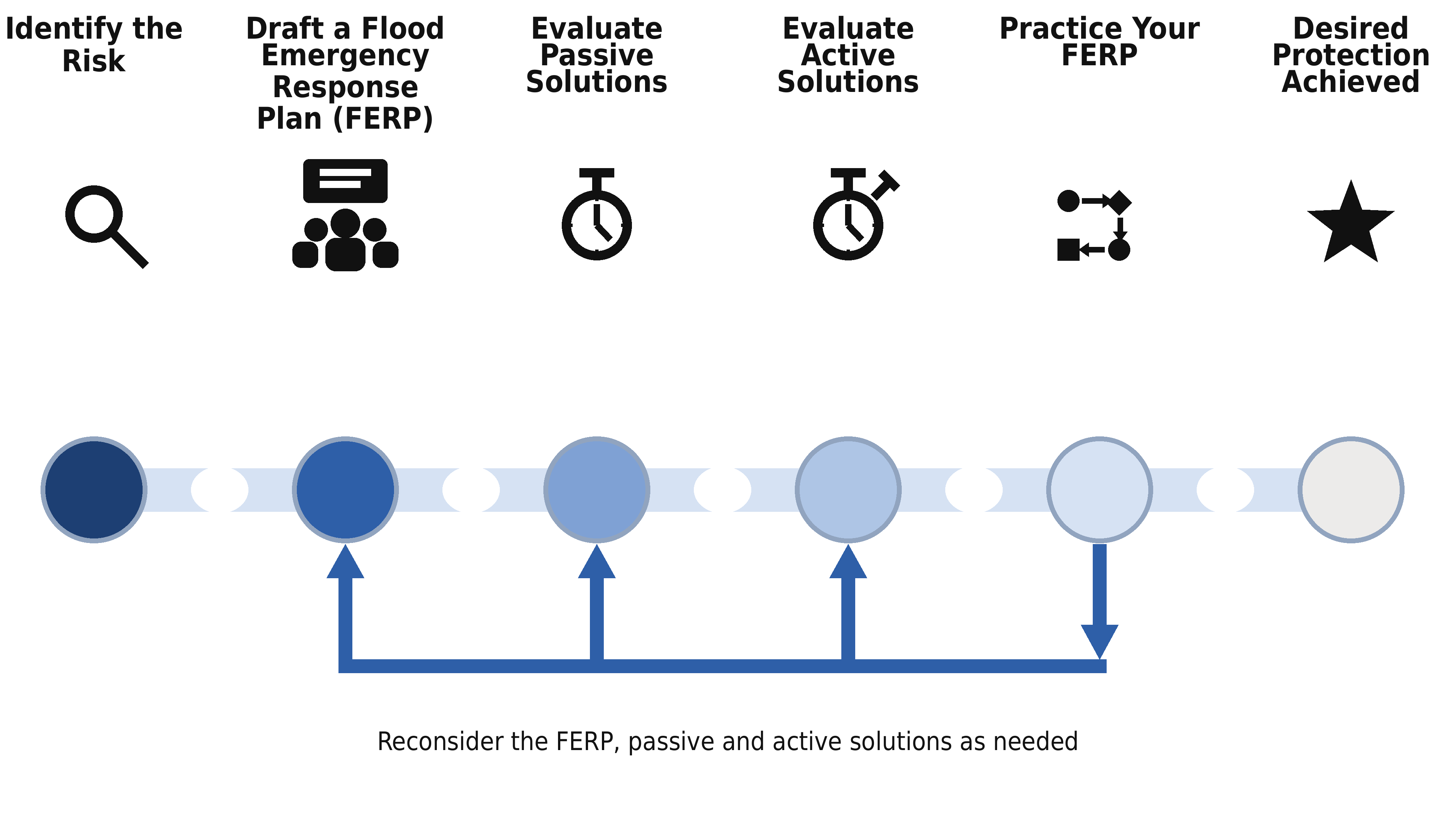
Figure 1. Flood resilience is an iterative process. Deployment drills and changing site conditions may reveal the need to revise the FERP, adjust staffing or reconsider selected mitigation measures.
2. How are the appropriate flood mitigation solutions identified for a specific facility?
There are many different types of solutions available for flood mitigation. Selecting the appropriate one requires determining the assets and operations that must be protected, the anticipated flood depth and duration, as well as the available warning time and realistic staffing capacity.
This assessment should drive product selection. A common mistake is purchasing a robust flood mitigation solution without first determining whether it is properly suited for the facility. A barrier rated well above the expected water depth may still be the wrong choice if it cannot be deployed within the available warning time or requires more personnel than the site can provide.
Many flood mitigation products also reach the market without documented data showing how they will perform under real-world conditions. Selecting solutions with independently verified performance reduces uncertainty and supports more informed flood mitigation strategies.
3. What makes a FERP effective?
A FERP translates the flood assessment into actions to take before floodwaters arrive. It prioritizes the buildings, equipment, and operations that require attention. It also establishes who can activate the plan, defines triggers based on forecasts or observed site conditions, and assigns responsibility and timing for each task.
An effective plan must reflect the facility’s operating conditions and available warning time. A site near a large river may have hours or days to act, while a location exposed to flash flooding may have only minutes. The plan should also function overnight, on weekends, and during holidays when fewer people may be available. Equipment and tools should be passive (always in place for deployment) or stored where the assigned team can access them quickly, with backup responsibilities defined if primary responders are unavailable. Teams should practice the FERP on a clear, blue-sky day when no flooding is expected to make sure everyone knows what to do and can complete their tasks within available warning times.
4. Does simply installing a flood barrier or other equipment result in adequate protection?
Installing flood mitigation equipment is only one part of an effective strategy. True resilience requires passive measures, active solutions, and operational readiness working together. Passive measures (curbs, grading, elevated critical equipment, flood-resistant glazing, permanent sealing of air gaps, etc.) remain in place, do not require deployment when flooding is imminent, and are maintained through regular inspections and maintenance. Active measures (flood doors, removable barriers, and other deployable equipment) introduce a human element. Closing a flood door, for example, requires the right personnel to take necessary steps within the available warning time.
Deployment drills can help test the human element, showing whether the strategy can be carried out as planned. A FERP may assign one employee to install barriers at five locations, but a deployment drill can reveal whether this work is achievable within the available warning time. It should confirm that responsibilities are clear, equipment and tools are accessible, and each task can be completed safely and on schedule. Any gap should prompt a revision before a true emergency.
5. What protocol can be used to identify and select one flood mitigation product over another?
Not every flood mitigation product on the market has been tested to demonstrate how it will perform under real-world flood conditions. Live installation does not have to be the first time a product’s ability to mitigate floodwaters under specific circumstances is tested. The American National Standard for Flood Mitigation Equipment (ANSI/FM 2510) establishes testing requirements for components and materials, as well as the complete product, system or assembly in its deployable configuration. Testing evaluates product characteristics and capabilities, providing independent evidence that the product meets the relevant performance requirements.
FM Approval does not replace a site assessment nor designate a product as suitable for every application.
The FM Approved configuration must be matched to expected, site-level flood conditions and operational needs.
6. What is the difference between preparing for a flood and being flood resilient?
Preparation can refer to having equipment or a written plan in a place. Flood resilience is an iterative process that requires exposure identification, the development and practice of a formalized response plan, and the implementation of mitigation measures that align with the facility’s needs – including the use of tested and certified flood mitigation products for protection.
Flood resilience begins long before the water rises
Organizations do not have to develop this approach alone. FM Property Loss Prevention Data Sheet 1-40 (Flood) provides guidance for assessing flood exposure and evaluating mitigation options, while the Approval Guide identifies FM Approved products that have been tested and certified for specific flood conditions. Together, site-specific engineering, a practiced FERP - see FM Property Loss Prevention Data Sheet 10-1 (Pre-Incident and Emergency Response Planning - Flood), and independently evaluated equipment can turn an assessment into an actionable flood resilience strategy.