
Climate resilience is built on proven products and performance
FM Approved solutions combat the risks associated with fire, flood, wind, and hail
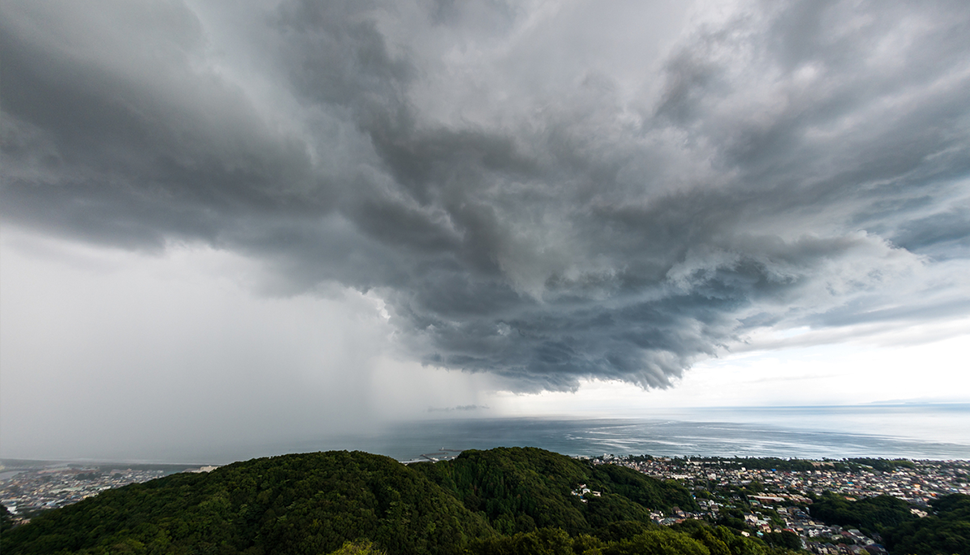
As climate hazards become more frequent and severe (global disasters now exceed $2.3 trillion annually), facilities must withstand increasingly intense and frequent hazardous conditions and events. When they fail, the costs can be extraordinary.
Natural hazards, sometimes categorized as secondary perils, are becoming primary challenges for property owners. Last year alone, severe convective storms, floods and wildfires accounted for 92% of global insured losses. Concurrently, properties are becoming more costly to repair and replace. Data centers, manufacturing facilities, hospitals, and other critical infrastructure contain valuable technology and equipment, driving U.S. reconstruction costs up 3.4% year over year. Supply constraints can add further cost and delay.
This combination is changing what building owners and engineers should expect from a facility’s materials and systems. Adherence to local code requirements is an important baseline but is often insufficient when hazards intensify, and the frequency and seriousness of failures climb. Stakeholders need confidence that building products have been independently tested and certified to withstand the real-world conditions.
FM Approvals independently evaluates building products against rigorous standards of quality, technical integrity and performance. More broadly, FM’s engineering specialists help facility owners understand their specific exposures and make informed decisions about how to protect their properties against evolving climate risks.
As the cost and value of the built environment continue to rise, initiating proactive engineering decisions and strategies are paramount to preserving operations, reducing future losses, and maintaining the long-term value of the facility.
Positioning facilities to withstand current and future climate risks
Products and systems for commercial and industrial facilities are often specified based on projected needs over the next five or 10 years, but studies show the average building lifespan exceeds 70 years.
Implementing that kind of long-term resilience requires designs based on what a facility is likely to endure over its full lifespan, rather than what it has experienced in recent history.
For example, while a “100-year” flood sounds rare, it has a 1% chance of occurring in any given year. Over 30 years, that chance rises to about 26%, and over 50 years to about 40%. Surviving the last storm may have been a near miss, not proof that the facility is prepared for the next one.
Public flood maps and regulatory resources are useful starting points but lack the level of detail needed to understand how water could behave at a specific site. For a facility with hundreds of millions of dollars in investment, a site-specific flood study can provide the information needed to make design decisions confidently.
According to FEMA, mitigation investments can save as much as $13 for every $1 spent, depending on the measure. As buildings become more expensive to build, repair and operate, addressing resilience during design can deliver far more value than trying to retrofit it later.
Climate change requires a new way of thinking about building products
As climate hazards intensify, one question casts a shadow over building systems design: how can you have confidence what is installed will perform as intended under extreme conditions?
The answer? Understanding what the product has been tested for and under what conditions. Without demonstrated performance, simply purchasing a well-marketed product can potentially create false confidence in its resilience. FM Approvals testing and certification close that gap, providing independent verification of whether or not a product will perform as expected under hazardous conditions.
That need for demonstrated performance applies across all types of climate hazards:
- Hail resilience incorporates how a complete roofing assembly continues performing after impact.
- Wind resilience depends on how the entire building envelope performs together.
- Flood resilience starts with understanding the site-specific flood hazards and selecting flood mitigation solutions that match its flood depth, warning time, staffing and operational needs.
The general quality of building products and materials did not suddenly become inadequate, instead climate change has forced these products to be designed and improved to perform under conditions that differ significantly from the past.
The majority of loss is preventable
FM Approved products are one piece of FM’s engineering-backed philosophy that beings with a simple premise: the majority of property loss is preventable. Studying the hazard, understanding what a facility is prone to, and making informed decisions before an event occurs all reduces the chance of a vulnerability becoming a major operational loss.
A blue-sky day is the best time to discover that an installed product is inadequate for actual conditions, a barrier takes longer to deploy than expected, or a system does not fit the site. Conversely, only uncovering these issues when severe conditions are imminent is problematic. Selection of mitigation solutions should be viewed through the same lens: Will this product perform under the conditions this facility may face over its lifetime? That tactical shift contributes to climate resilience and underscores how demonstrated product performance matters more than ever.